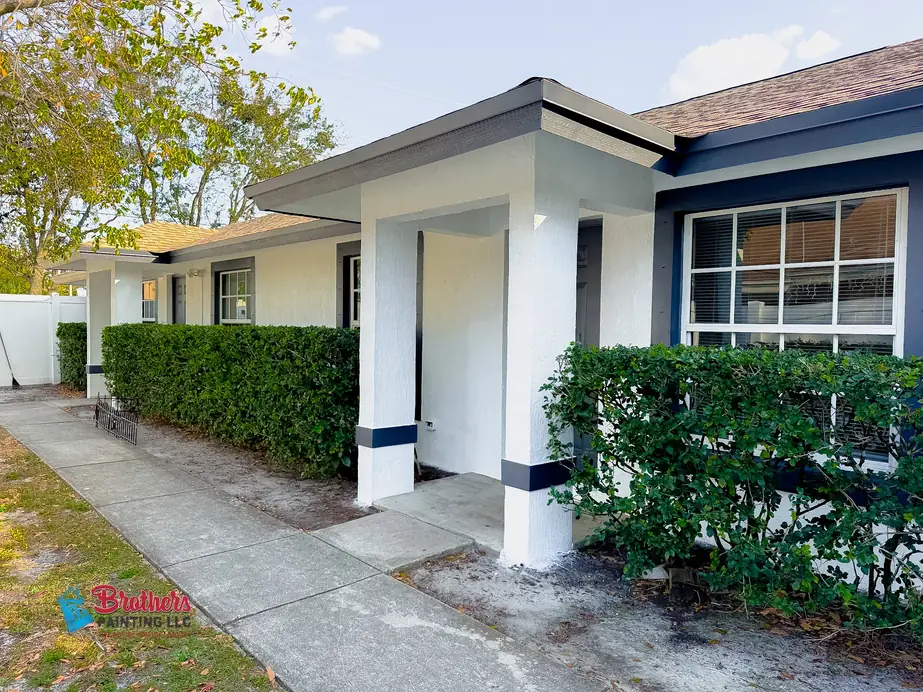
Why South and West Walls Chalk First
Exterior Home Painting in West Palm Beach for faded siding, peeling trim, chalking stucco, and homes needing complete protection from Florida sun and salt air.
Stucco tells you when its paint is giving up. Run a hand across a south or west wall and come away with a pale, powdery smear, and you're feeling the binder in the paint breaking down under years of UV. Once a wall chalks, it stops shedding water the way it should, and the color looks washed out long before the surface underneath is in real trouble.
Salt air and humidity work on the rest of the house. Fascia and soffits hold moisture, so paint lifts and peels there first. Trim with tired caulk lets rain in behind the coating, and the wood underneath goes soft. Along the coast from Juno Beach down through Delray Beach and Boca Raton the same pattern shows up: the paint isn't the only thing that gave out, the surface under it did too.
Pressure Wash First, Coatings Last
Every exterior starts with a pressure wash, because paint can't hold to chalk, mildew or old dirt. Then the scraping and sanding begin: loose paint comes off, edges get feathered, and bare spots are readied for primer. Anything cracked or damaged is repaired before it gets covered, and gaps around trim, windows and joints are caulked so water has nowhere to get in.
Primer goes on next, then premium coatings, applied when the surface is dry. That sequence covers stucco, siding, trim, fascia, soffits, doors and shutters, each one coated the way that surface needs. Rushing it is how a repaint ends up peeling early.
The job site stays clean and your belongings stay protected while the work goes on, and the team doesn't leave until it's complete. On the big stucco elevations you see in Palm Beach Gardens and Wellington, the washing and priming steps matter as much as the finish coats that get the compliments.
Rainy Season, Shaded Walls and What to Watch
Timing counts here. Coatings need a dry surface, and Palm Beach County's summer rains can stretch a schedule, so planning around the wet months is worth raising before a date is set.
After the job, keep an eye on the shaded walls. North-facing stucco and walls behind hedges stay damp longest, and that's where mildew shows up first. Check the fascia and the bottom edge of doors and shutters each spring. Caught early, a hairline crack near a window or a patch of lifting paint stays a small repair.
Request a free exterior painting estimate to assess your home's current condition and discuss coating options. The estimate is free and written down, and it covers the sequence, the materials and the timeline.